AMP8 has landed, and with it the biggest investment programme the UK water industry has seen in decades, billions committed, thousands of assets to survey, maintain, upgrade or replace, and nowhere nearly enough time, budget or people to do it the way we've always done it.
Something has to give, and it should be the methods, not the standards.
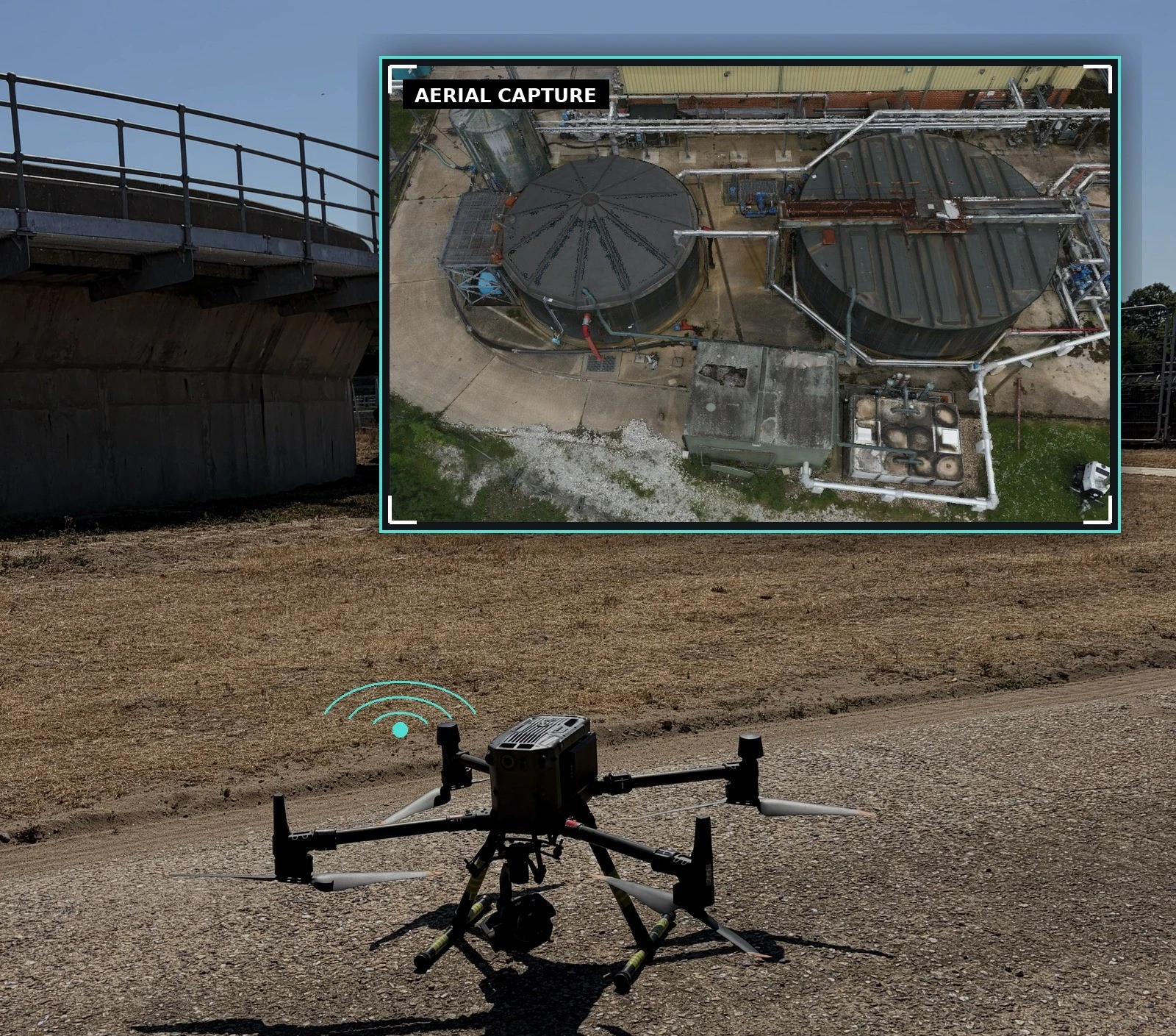
Our team recently completed a drone survey of a water treatment works, combining a full dilapidation survey with a digital twin model of the site. It's a clear example of what "doing more with less" looks like in practice for water infrastructure asset management.
Using drone technology for condition surveys means faster data capture, safer access to tanks, roofs and confined structures, and a level of detail a traditional walk-round survey simply can't match.
Scale that across an AMP8 programme covering thousands of sites across the water industry, and the numbers change completely:
- Faster dilapidation surveys mean more assets assessed per pound spent
- A digital twin means fewer repeat site visits for design, planning and maintenance
- One accurate 3D model becomes a single source of truth for contractors, engineers and asset managers
- That model follows the asset through its next AMP cycle and beyond, not just through one inspection
If the water industry is serious about delivering AMP8 on time and on budget, drone surveys and digital twin technology can't stay a nice-to-have. They need to become the standard approach to asset management and maintenance planning across the sector.
How is your organisation using drone technology or digital twins to prepare for AMP8? We'd love to hear how others in the industry are approaching it and happy to share more on how this survey and digital twin were built.