Carrying out a bridge inspection or bridge survey in confined or restricted environments can present significant challenges, particularly where there is limited headroom between the water level and the bridge soffit. Traditional inspection methods such as scaffolding, rope access, pontoons or mobile platforms are often impractical, costly, and can introduce unnecessary safety risks.
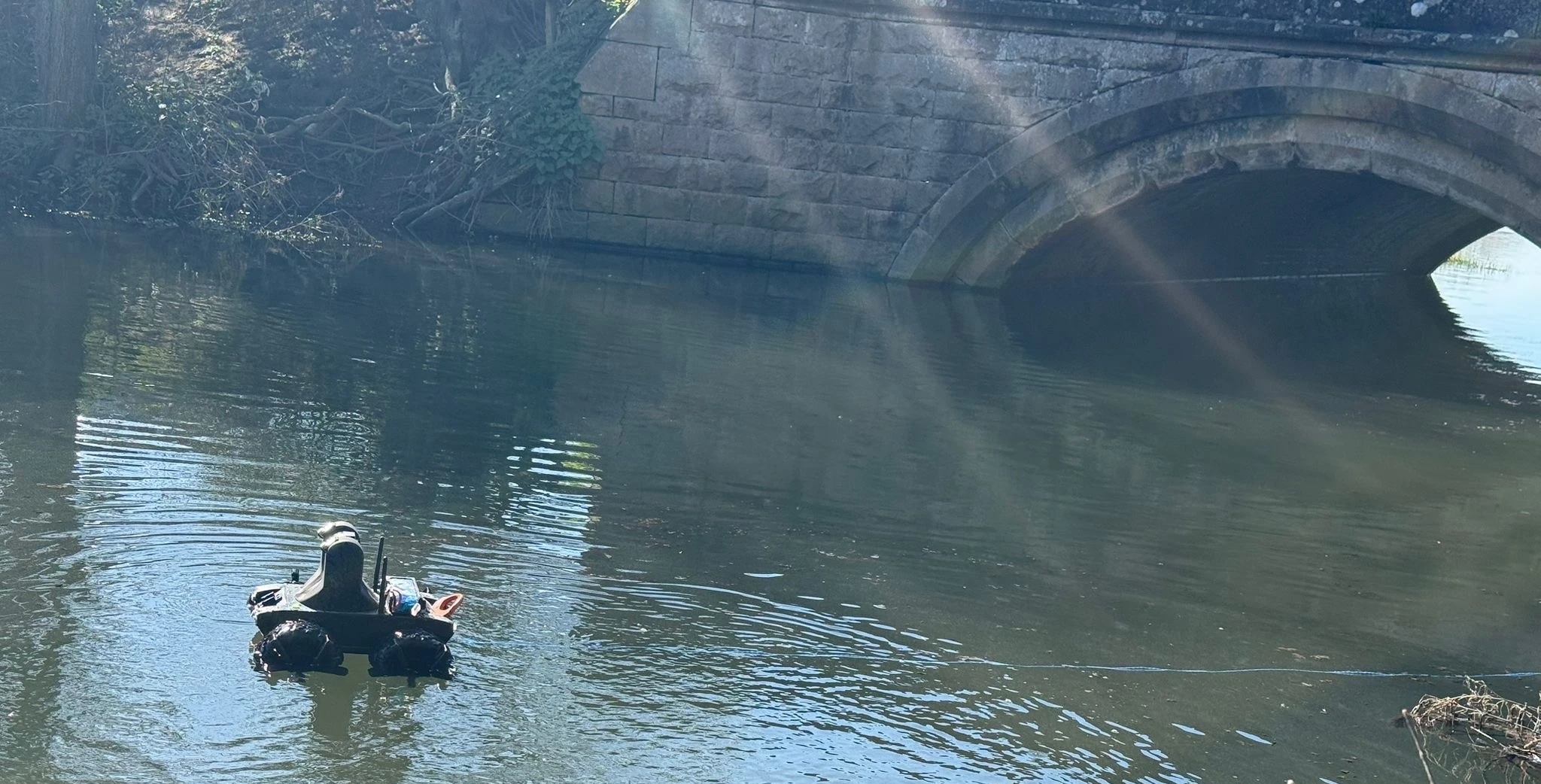
On a recent project, we were tasked with undertaking a detailed bridge inspection to assess the condition of the soffit where access was severely restricted. The clearance between the water level and the underside of the bridge was too low to safely deploy a confined space drone, meaning an alternative solution was required.
To overcome this, we deployed our ROV, a compact remotely operated robotic boat system designed for confined space inspection and challenging environments. Operating directly from the water level, the system enabled us to safely access and inspect areas beneath the bridge that would otherwise be difficult or impossible to reach using traditional methods.
The ROV captured high-definition visual data of the bridge soffit, allowing engineers to identify defects such as cracking, corrosion, material degradation, and structural damage. This approach is particularly effective for culvert inspection, bridge soffit surveys, and other infrastructure where access is constrained by geometry or environmental conditions.
Using robotic inspection technology significantly reduces the need for working in water, eliminates the requirement for pontoons or rope access, and minimises disruption to surrounding infrastructure. Surveys can be completed quickly and efficiently, often within hours, providing a cost-effective alternative to traditional bridge inspection methods.
By adopting innovative solutions such as remotely operated vehicles/boats and drones, we are able to deliver safer, faster, and more reliable bridge surveys and confined space inspections. This ensures asset owners receive high-quality data to support maintenance planning, structural assessments, and long-term asset management, even in the most challenging environments.